
Black Mold Warning Signs Every Missouri Homeowner Should Know
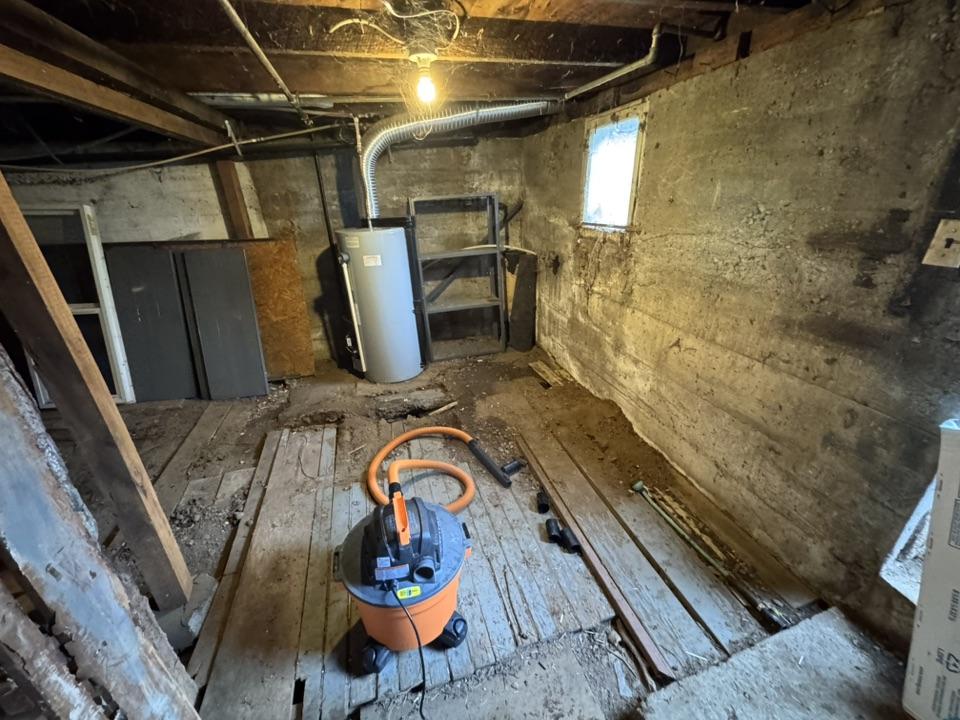
Missouri's climate is close to ideal for indoor mold. Humid summers, wet springs, and a housing stock heavy on finished basements and crawl spaces give spores everything they need. Most of what homeowners call black mold is one of several dark species; Stachybotrys chartarum is the one that earned the name, and it is the one that most often follows sustained water damage rather than ordinary humidity.
You do not need to identify the species to act. Any significant colonization is handled the same way. What matters is recognising it early.
Odor is usually the first signal
A persistent musty, earthy smell — like a damp cellar or old paper — is typically the earliest and most reliable indicator, and it often appears well before anything is visible. Mold growing inside a wall cavity, under carpet pad, or behind a basement finish produces microbial volatile organic compounds that pass through the assembly even when the colony does not.
The tell is location and persistence. If the smell is strongest in one room, near the floor, or when the HVAC first kicks on, and it does not clear with ventilation, that is worth investigating.
What visible growth looks like
Look at the places that stay damp: around window frames where condensation collects, along the base of basement walls, under sinks and behind toilets, at the ceiling below an upstairs bathroom, in the crawl space, and around any past water stain.
Growth appears as black, dark green, or grey patches, sometimes with a slightly fuzzy or slimy texture rather than the flat, powdery look of dust or soot. On drywall it often shows as a stain that spreads outward with a soft edge. Discolouration that returns after you clean it is growth, not dirt.
Warping, bubbling paint, or drywall that is soft to the touch means moisture is present inside the assembly, and where there has been sustained moisture there is usually growth whether or not you can see it.
Symptoms that track with the building
Health effects vary considerably between people, but the pattern that points at the building rather than at allergies is symptoms that ease when you leave and return within hours of coming home.
Common presentations are nasal congestion, throat irritation, cough, itchy eyes, headaches, and unusual fatigue. People with asthma, existing allergies, infants, older adults, and anyone immunocompromised react at lower exposures and should not remain in an affected space during remediation.
If more than one household member has the same unexplained symptoms on the same schedule, treat that as evidence and inspect.
Why not to remove it yourself
Disturbing a colony releases spores. Wiping visible growth with bleach on a porous surface does not kill what has rooted below it, and it aerosolizes what is on top — which is how a contained basement problem becomes a whole-house problem through the return duct.
Bleach is also the wrong product for porous material. It is mostly water; the water penetrates and the chlorine does not, so the surface lightens and the colony continues underneath. That is why homeowners describe mold that keeps coming back to the same spot.
Professional remediation works differently: containment and negative air pressure so nothing migrates, HEPA filtration, physical removal of colonized porous material, antimicrobial treatment of what remains, and — the part that actually prevents recurrence — identifying and correcting the moisture source.
Finding the water first
Mold is always a symptom. Remediating without fixing the moisture source guarantees a repeat, and in Missouri the usual culprits are grading and downspouts discharging against the foundation, failed sump pumps, unsealed crawl spaces, condensation on uninsulated ductwork, slow supply-line and drain leaks, and bathrooms venting into an attic rather than outdoors.
If you suspect mold in your St. Charles County home, we will inspect, find the moisture source, and give you a written scope before any demolition. Call Fast Restoration and we can usually be out the same day.
Need Professional Restoration Services?
Fast Restoration provides 24/7 emergency response for water damage, mold remediation, and property restoration throughout St. Charles County, Missouri.